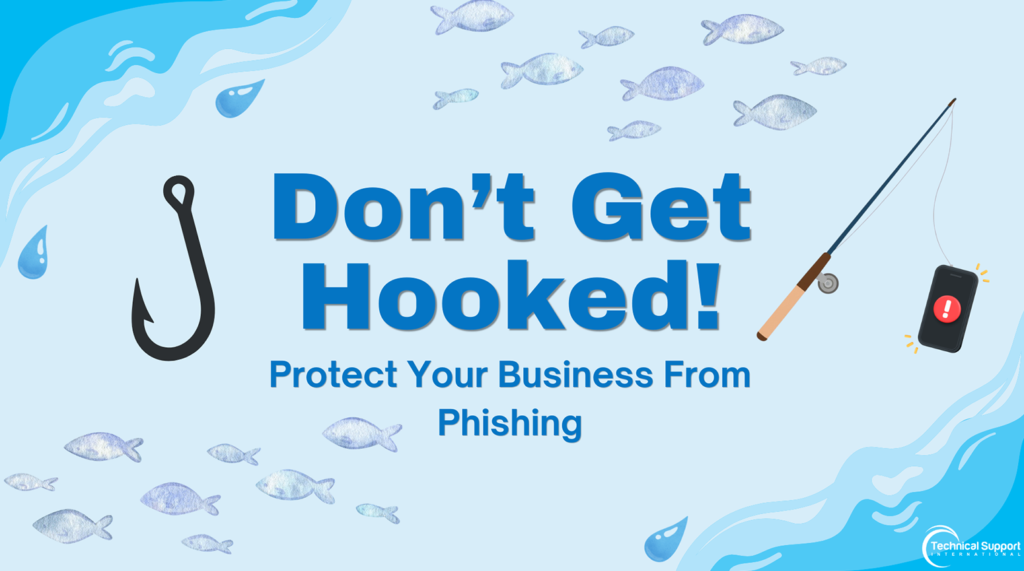
Don’t Get Hooked: Protect Your Business From Phishing
Christopher Souza | CEO
It’s 2026, and phishing is still one of the biggest cybersecurity threats putting business’ accounts, sensitive information, and company funds at risk. Attackers impersonate trusted contacts using convincing requests to persuade employees to disclose passwords, approve fraudulent payments, or open malicious files with successful attempts leading to stolen data, ransomware, and interrupted operations. In this article, we detail why business owners should regularly review how their employees recognize phishing threats and how their security controls respond when an attack gets through.
Phishing by the Numbers
Verizon’s 2026 Data Breach Investigations Report identified phishing as an initial entry point in one of every six breaches with Microsoft also reporting nearly 8 billion email-based phishing threats between April and June 2026. Meanwhile, the FBI recorded approximately $3.05 billion in reported losses from business email compromise, a category of fraud involving deceptive business communications. These figures showcase the scale of malicious activity and the financial consequences businesses face from phishing attacks.
What Phishing Looks Like in 2026
The usual red flags of a phishing email including like poor spelling and awkward wording are have become unreliable ways to judge whether a message is malicious. Cyber attackers are increasingly using AI to produce believable polished messages, and remove the typical red flags that might otherwise raise suspicion.
Attackers are also using channels that employees are more likely to overlook. Microsoft’s second-quarter research documented a dramatic increase in phishing attempts through QR codes attachments and unsuspecting links sent through Microsoft Teams communications. Technical support impersonation were noted as a recurring issue as well, with attackers warning employees about fake account problems then requesting them to scan a code or follow instructions exposing their networks.
Give Employees Practice and Clear Reporting Procedures
Phishing awareness training should begin during onboarding and continue throughout an employee’s entire career as the cybersecurity landscape evolves. Use short, job-specific lessons and realistic simulations, then provide follow-up instruction where most employees struggle. Be sure to train leadership teams and employees who handle financial records, customer information, or account access. CISA recommends ongoing education and keeping staff informed between training sessions, especially as the frequency and complexity of these types of attacks increases.
Also, keep the process supportive. Employees should feel comfortable reporting suspicious activity and admitting when they have interacted with a questionable message. A 2026 discussion published by NIST researchers emphasizes how positive reporting behavior is a result of meaningful training.
What All Employees Should be Doing
- Verify sensitive requests independently. Confirm payment instructions, bank account changes, and unusual requests for confidential information through a known telephone number or established process. Contact details supplied in a suspicious message could lead directly back to the attacker.
- Strengthen account authentication. Require multifactor authentication for email, remote access, and administrative accounts. Use phishing-resistant options, such as security keys, where supported.
- Review email protections. Have your IT provider filter malicious links, attachment detections, and email authentication settings that help prevent attackers from impersonating your domain. These controls should be maintained as part of any security program.
- Act swiftly after a suspected compromise. Notify your security provider and explain how someone got hooked and whether they clicked a bad link, entered credentials, downloaded a file, or sent money. Follow and practice your incident response procedures. For fraudulent payments, contact your financial institution immediately and report the incident to the FBI’s Internet Crime Complaint Center.
TSI Helps Defend Your Business
TSI’s clients rely on our team of cybersecurity experts to help strengthen their defenses to cyberthreats by providing a full suite of Managed IT Security Services that include but are not limited to regimented employee security training, systems patching, vulnerability management, and network security monitoring. Our services and plans offer increasing levels of protection and the strategic support to address your organization’s exposure to cyber risks or compliance requirements.
Contact TSI Today!
Is your organization ready for its next phishing attempt? Contact TSI today to discuss your current protections, employee training needs, and opportunities to reduce your exposure. Stay vigilant and don’t get hooked!

About Technical Support International
TSI is 37-year old cybersecurity (MSSP) and IT support (MSP) company specializing in helping DIB organizations address their NIST 800-171 and CMMC compliance obligations. As a CMMC-AB Registered Provider Organization (RPO), TSI offers a complete NIST 800-171 and CMMC support solution to help guide our clients toward a successful certification audit and provide the assurance that they’re adhering to these expansive compliance requirements.

Cyber Security Policy Starter Kit:
10 Critical Policies That Every Company Should Have in Place